
Click Image for Gallery
Day 1. Mexico City. Arrival and transfer
At the international airport, you'll be met and taken to your hotel. A Mexico City tour begins with anticipation: soon you'll step out onto the vast Zócalo, and on Madero Street you'll study the blue tiles of a historic palace. In the Mexican capital, it's easy to get caught up in the details: behind the ornate facades lie stories of the conquistadors, and at the Museum of Anthropology, an encounter with the art of indigenous peoples awaits.
A special highlight of a guided Mexico tour is the pyramids of Teotihuacán. Try to picture yourself ahead of time at the foot of the Pyramid of the Sun: your gaze climbs the stone steps all the way to the top.
The combined Mexico tour has other surprises in store too. Soon you'll glide between the high walls of Sumidero Canyon, study Maya murals at Bonampak and see the turquoise cascades of Agua Azul. The Mexico City - San Cristóbal - Palenque - Cancún tour ends by the Caribbean Sea. After ancient temples in the jungle, it's especially lovely to swap your walking shoes for sandals or step barefoot onto the sand.
countries/mexico/new-photos/mekhiko-siti/jezael-melgoza-636709-unsplash.jpg
Day 2. Mexico City. Historic center and museums
After breakfast, we'll head to the historic center of Mexico City. On a Mexico City sightseeing tour, you'll be struck by the mix of monumental buildings and elegant pedestrian streets. At the Zócalo, you'll want to linger: before you stand the Cathedral, which took several centuries to build, and the National Palace of Mexico, with a facade combining reddish volcanic tezontle stone and light stone frames around its windows and portals.
Along Madero Street, we'll walk to the House of Tiles in Mexico City. Study the blue-and-white Talavera tiles: the patterns cover the walls, turning the facade into a ceramic panel. Next, the Palace of Fine Arts awaits: it's lovely to pause before its pale marble facade and trace the outline of the dome with your eyes.
In the afternoon, we'll visit the National Museum of Anthropology. Here the Aztec heritage is preserved: you'll see stone sculptures and the Sun Stone. It's an enormous circular basalt monolith with carved images conveying Aztec ideas about time, the movement of the Sun and the structure of the world.
Please note: entry to the National Palace and access to the murals are not guaranteed, as this is the official residence of the President of Mexico.
countries/mexico/new-photos/mekhiko-siti/mexico-2014178-1920.jpg
Day 3. Mexico City. Teotihuacán and the Basilica of Guadalupe
After breakfast at the hotel, we'll head to the Basilica of Guadalupe. In the new church, you'll see the image of the Virgin of Guadalupe on Juan Diego's cloak. According to Catholic tradition, the image appeared miraculously on the fabric after the Virgin Mary's apparition in 1531. Before this relic, you feel especially keenly what a place faith holds in the lives of Mexicans.
Next, our Mexico pyramids tour takes you to Teotihuacán, the City of the Gods. The Teotihuacán tour unfolds among ancient structures, dominated by the Pyramid of the Sun and the Pyramid of the Moon. The first rises in broad stone tiers: at its base, you'll want to tilt your head back to see the top. Its massive silhouette looms over the ancient city. The second is smaller but stands at the end of the Avenue of the Dead, closing the perspective. Behind it rises a mountain: your gaze instinctively compares the outlines of the stone tiers with the natural slope. Between these giants, you feel like a grain of sand.
In the afternoon, we'll return to the hotel in Mexico City.
countries/mexico/new-photos/mekhiko-siti/teoteukan.jpg
Day 4. Mexico City - Tuxtla Gutiérrez - San Cristóbal
After breakfast at the hotel, you'll be taken to the airport for your flight to Tuxtla Gutiérrez. The flight is not included in the price. On arrival, you'll be met and taken to the water: your Chiapas tour continues among sheer cliffs.
From the boat, Sumidero Canyon astonishes with the height of its walls: in places they rise more than a thousand meters. You have to tilt your head back to make out the upper edge, where the rock meets the sky. Below, it's especially striking how tiny the boat looks beside these giants. You'll want to take photos - but put the camera down and simply look up.
During the Sumidero Canyon boat tour, the canyon reveals itself from different angles: around each bend of the riverbed, new rock walls come into view, and your gaze shifts from the water to the vegetation on the steep slopes. After the boat journey, we'll head to San Cristóbal de las Casas for the night. Getting to know its cobblestone streets and colonial architecture lies ahead; for today, you can rest after the flight and the drive.
countries/mexico/new-photos/kanon-sumideros.jpg
Day 5. San Cristóbal de las Casas
After breakfast, we'll step out onto the cobblestone streets of San Cristóbal. In this colonial town in Chiapas, a mountainous state in southern Mexico, it's a pleasure to study the bright facades and peek around the corners of its alleyways. We'll walk to the Central Park of San Cristóbal, beside which stands the yellow Cathedral of San Cristóbal. Pause in front of it: the warm color of its walls is especially striking against the mountain sky.
Next, we'll head to Zinacantán, home to the Tzotzil people, master textile makers. Mexican crafts here are best studied up close: examining the weave of the threads and the fine stitches of the embroidery. The textiles of Chiapas stay with you for the work of hands that turn fabric into garments with intricate patterns. Try to follow a single design from edge to edge - how much patience it took the craftswoman!
In San Juan Chamula, we'll visit the Church of San Juan. Here Catholic beliefs intertwine with ancestral traditions. Observing local rituals calls for sensitivity: for the residents, this is part of everyday spiritual life, which we're permitted to glimpse.
countries/mexico/new-photos/san-kristobal/roger-ce-yr-ogbn91i8-unsplash.jpg
Day 6. San Cristóbal - Agua Azul - Palenque
After breakfast, we'll leave San Cristóbal de las Casas and head for Palenque. Ahead lie about 214 kilometers along a winding road: the drive will take at least 5 hours. Our Mexico tour continues with a descent from the Chiapas highlands to the tropical forests. Outside the window, the vegetation gradually changes - and with it, your impressions of the country.
Along the way, we'll stop at Agua Azul Falls. The water cascades down broad stone steps, breaks into white foam and gathers in turquoise pools. You'll want to linger and trace how the color shifts from the churning stream to the calm section. Minerals give the water its distinctive hue, which is exactly what the turquoise waterfalls of Chiapas are famous for. After the drive, it's a pleasure to stand by the cascades, listen to the roar and let your eyes rest on the shimmering water.
By evening, we'll arrive in Palenque for the night. On our Palenque tour, the encounter with the ancient Maya cities still lies ahead: for now, we'll settle into the hotel and rest after the journey.
countries/mexico/new-photos/palenke/4.jpg
Day 7. Yaxchilán and Bonampak
After breakfast, the Maya ruins of Yaxchilán await, hidden in the tropical forests of Chiapas. We'll cover the last stretch of the journey by boat along the Usumacinta River. From the water, we'll look at the green banks, anticipating our encounter with the ancient city. It can only be reached by river, and the journey through the jungle feels like an adventure.
In Yaxchilán, we'll linger by the carved stone lintels and stelae. Study the figures and hieroglyphs: these images tell the story and mythology of the city. Maya culture here takes on human faces - you'll want to understand whom the craftsman depicted and what event he preserved in stone.
Then we'll visit the archaeological site of Bonampak. After the austere reliefs, the colors here astonish: the murals of Bonampak have preserved multicolored scenes of daily life. Try to make out the gestures of the figures and the details of their attire. Against the backdrop of the plazas and the remains of residential buildings, these images help you picture the people who once inhabited the city.
In the afternoon, we'll return to Palenque for the night.
countries/mexico/new-photos/palenke/1.jpg
Day 8. Palenque. Archaeological complex
After breakfast, a new stop on your tour of the ancient Maya cities awaits - Palenque, an archaeological complex where more than two hundred structures have been preserved. A UNESCO World Heritage Site, Palenque invites endless study: from the general outlines of the temples to the carved details in the stone.
Exploring the ancient Maya city of Palenque, we'll step onto the Great Plaza. Above it rises the Temple of the Inscriptions in Palenque. Follow the steps leading to the sanctuary with your eyes: beneath this pyramid lies the tomb of Pakal, discovered in 1952. The temple served as the ruler's mausoleum, and it takes its name from the hieroglyphic texts carved into the limestone slabs.
We'll walk to the Temples of the Sun and the Cross, and examine the Building of the Bats. At the Palenque ball court, try to picture the players moving between the stone structures. After the monumental mausoleum, places like this help you imagine the city's daily life: you'll want to linger, look around and mentally bring people back to the empty plazas amid the dense jungle.
countries/mexico/new-photos/palenke/2.jpg
Day 9. Palenque - Cancún
After breakfast, we'll head to Villahermosa airport and fly to Cancún. On arrival, you'll be met and taken to your hotel. Our Cancún tour continues on the coast: days lie ahead that you can devote to the sea and to strolling.
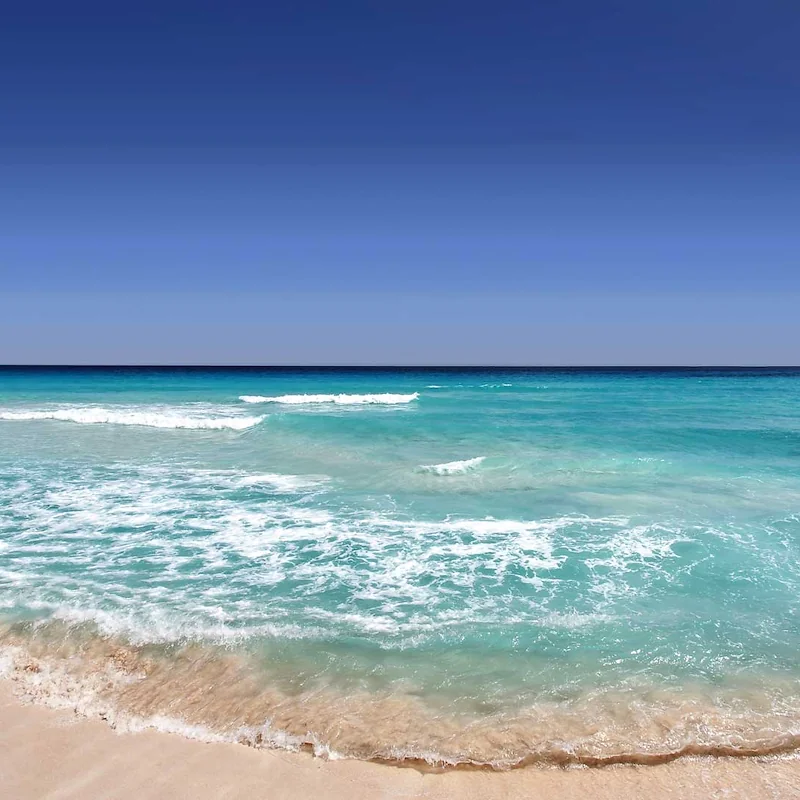
Washed by the Caribbean Sea, Cancún is loved for its fine white sand and water that shifts from translucent turquoise near the shore to deep blue in the distance. It's lovely to take off your shoes and walk along the surf, letting the waves wash over your feet. Pelicans are often seen over the beaches: it's fascinating to watch them fly above the water and dive for fish.
In Cancún, you can round out your holiday with a self-guided visit to the Maya ruins of El Rey. Among the remnants of stone structures, it's easy to forget that a modern resort hums nearby. Many Cancún hotels sit on the narrow strip between the sea and the Nichupté Lagoon. On one side, beaches await; on the other, mangroves. In the evening, it's a pleasure to pick a Mexican restaurant and linger over dinner.
countries/mexico/new-photos/kankun-i-tulum/darren-lawrence-k4bslptjkja-unsplash.jpg
Days 10-11. Cancún. Relaxation
After breakfast, spend the day however you like. A Cancún holiday can begin with a swim: Cancún's beaches draw you in with fine white sand and turquoise water. If you're in the mood for activity, book a boat trip with snorkeling at the Punta Nizuc reef. With a mask on, it's fascinating to watch fish dart between the corals.
Another option is a guided kayak trip through the mangrove channels of the Nichupté Lagoon. Sitting close to the water, you'll study the tangle of roots and look for birds among the branches. A Caribbean coast vacation in Mexico like this brings you face to face with nature, literally within arm's reach.
In the evening, head to Las Palapas park for street food: try tacos and marquesitas - crispy rolled wafers with sweet filling and cheese. You can also sample tequila: in Mexico, it's made from blue agave, and at a bar you can compare a young one with an aged one. Our Caribbean tour leaves you free to decide what this day will look like. All optional activities and meals are paid separately.
countries/mexico/new-photos/kankun-i-tulum/fernando-garcia-3pwyogd4q-i-unsplash.jpg
Day 12. Cancún. Departure
After breakfast at the hotel, at the appointed time you'll be taken to the airport for your flight home. Your guided Mexico tour comes to an end, but now the names of ancient civilizations carry faces, patterns and cities for you.
Think back to the museums of Mexico City: the stone images of deities that at first seemed a mystery. After Yaxchilán and Palenque, it's easier to picture whom the creators of these sculptures prayed to, and what their plazas and temples looked like. And your encounter with Tzotzil weaving showed that the traditions of indigenous peoples live on in the work of today's artisans.
On our combined Mexico tour, the country also stayed with you in other ways: the roar of Agua Azul's cascades, the sheer walls of Sumidero, the soft sand of the Caribbean coast. Now the history of the ancient world has taken on substance: behind the words "Maya civilization" stand stone cities in the jungle, faces in frescoes and temple steps you paused beside.
You've touched the real Mexico, and your world has grown wider - by an entire country.
countries/mexico/new-photos/kankun-i-tulum/david-vives-elf8m-ywrty-unsplash.jpg
Viva Mexico
PayPal
You can pay by simply choosing PayPal at checkout
Do you have questions?
Call us right now to get your questions answered.
-
 Package
- Booking Code: viva
- Availability: Available for Booking
- Total: $4,046